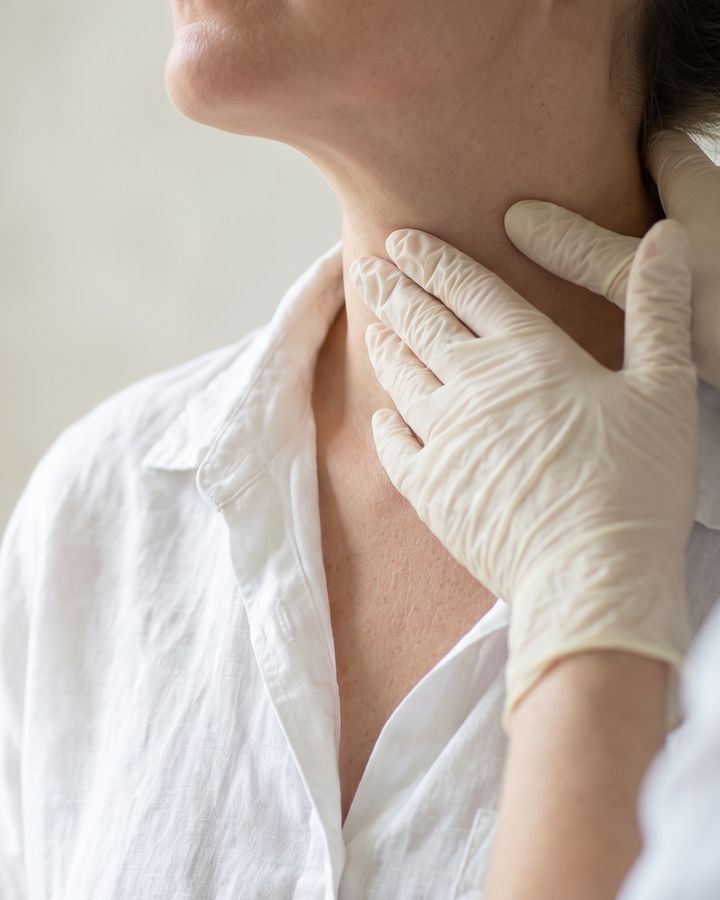
Hypothyroidism: Often missed with standard blood testing. To sufficiently test thyroid function, a full blood panel including TSH, free T4, free T3, thyroglobulin antibodies and anti-thyroid peroxidase antibodies are required. This gives a more accurate and reliable picture and can help with pointing towards an immune-induced cause for example Hashimoto’s.
Options ranges between synthetic Thyroxine (T4) and bio-identical Triiodothyronine (T3) and T4 preparations, NDT (natural dessicated thyroid). Many people do well on synthetic T4 preparations. If a person is not feeling much different or improved on synthetic T4, then it is worth considering either adding synthetic T3 or using bio-identical T3/T4.
Hyperthyroidism: Blood tests that measure thyroxine and thyroid-stimulating hormone (TSH) can confirm the diagnosis. High levels of thyroxine and low or nonexistent amounts of TSH indicate an overactive thyroid. The amount of irregular TSH is important because it’s the hormone that signals your thyroid gland to produce more thyroxine.
Several treatments are available for hyperthyroidism and once diagnosed, it is best to have treatment initiated by an endocrinologist, in which case, a referral will be put in place.