
Meyer Clinic is delighted to welcome Professor Ali Ghanem, Aesthetic Surgeon of the Year 2025, to our Chichester clinic. Bringing exceptional expertise in facial rejuvenation, Professor Ghanem offers advanced aesthetic procedures designed to lift, tighten, restore and refresh the face with natural-looking results.
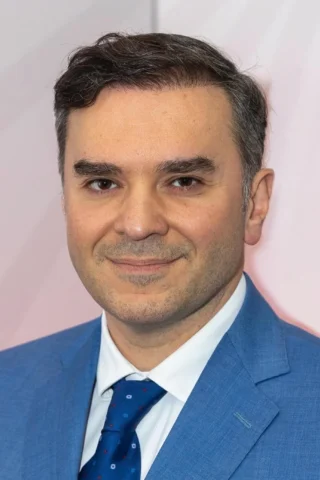
Professor Ali Ghanem is a leading aesthetic surgeon with specialist expertise in facial rejuvenation, skin tightening and regenerative aesthetic medicine. His approach combines surgical precision with a deep understanding of facial anatomy and ageing, allowing treatment plans to be tailored carefully to each patient’s features, concerns and desired outcome.
Advanced Facial Rejuvenation at Meyer Clinic
At Meyer Clinic, Professor Ghanem offers a comprehensive range of advanced aesthetic procedures, including:
- CO₂ laser skin resurfacing and tightening
- Suspension and absorbable thread lifts
- Fat transfer and nanofat techniques
- Facelift, neck lift, lipo lift
- Plastic surgery procedures
Many treatments can be performed under local anaesthetic at Meyer Clinic, offering patients access to consultant-led care in a discreet and comfortable clinical setting.
For more advanced surgical procedures requiring general anaesthetic, care is coordinated seamlessly with The Ghanem Clinic in London. This ensures patients benefit from continuity of care, with the right treatment setting recommended based on clinical needs, safety and the complexity of the procedure.
Professor Ghanem’s treatments can also be combined into bespoke facial rejuvenation packages, designed to address concerns such as lower-face laxity, softening of the jawline, jowls, deep wrinkles, sun damage, acne scarring, volume loss and more advanced signs of facial ageing. Where clinically appropriate, upper and/or lower blepharoplasty may also be incorporated as part of a full facial rejuvenation strategy.
Signature Packages
Professor Ghanem’s care can be tailored to individual goals through the following signature packages, each combining complementary treatments for a complete facial rejuvenation strategy:
Facial Laser Lift & Definition
Best for: jawline softening, jowls, and lower-face laxity
- LaserLift (full face and neck)
- Absorbable threads (face and neck)
- Botulinum toxin (up to 3 areas)
- HA fillers and/or skin boosters (Profhilo / Polynucleotides / Skinvive) ×2
- Light peel
- Medical skincare prescription
£6,800
Advanced Non-Surgical Facial Lifting & Resurfacing
Best for: deep wrinkles, sun damage, and acne scarring
- Fractional or full-field CO₂ laser (face and neck)
- Spring permanent suspension threads (face and neck)
- Botulinum toxin (up to 3 areas)
- HA fillers and/or skin boosters (Profhilo / Polynucleotides / Skinvive) ×2
- Light peel
- Medical skincare prescription
£8,800
Advanced Surgical Facial Lifting & Resurfacing
Best for: moderate to advanced facial ageing
- Mini face and neck lift
- Fat transfer, including nanofat
- CO₂ laser resurfacing
£14,800
Upper and/or lower blepharoplasty can be incorporated where clinically indicated as part of a full facial rejuvenation strategy. When combined with the Advanced Surgical Facial Lifting & Resurfacing package, inclusion of upper and lower blepharoplasty brings the package to £19,800.
Book Advanced Facial Rejuvenation
Initial Consultation – £260
Redeemable against procedure